Electronic Music for Wellness: The Pros and Cons
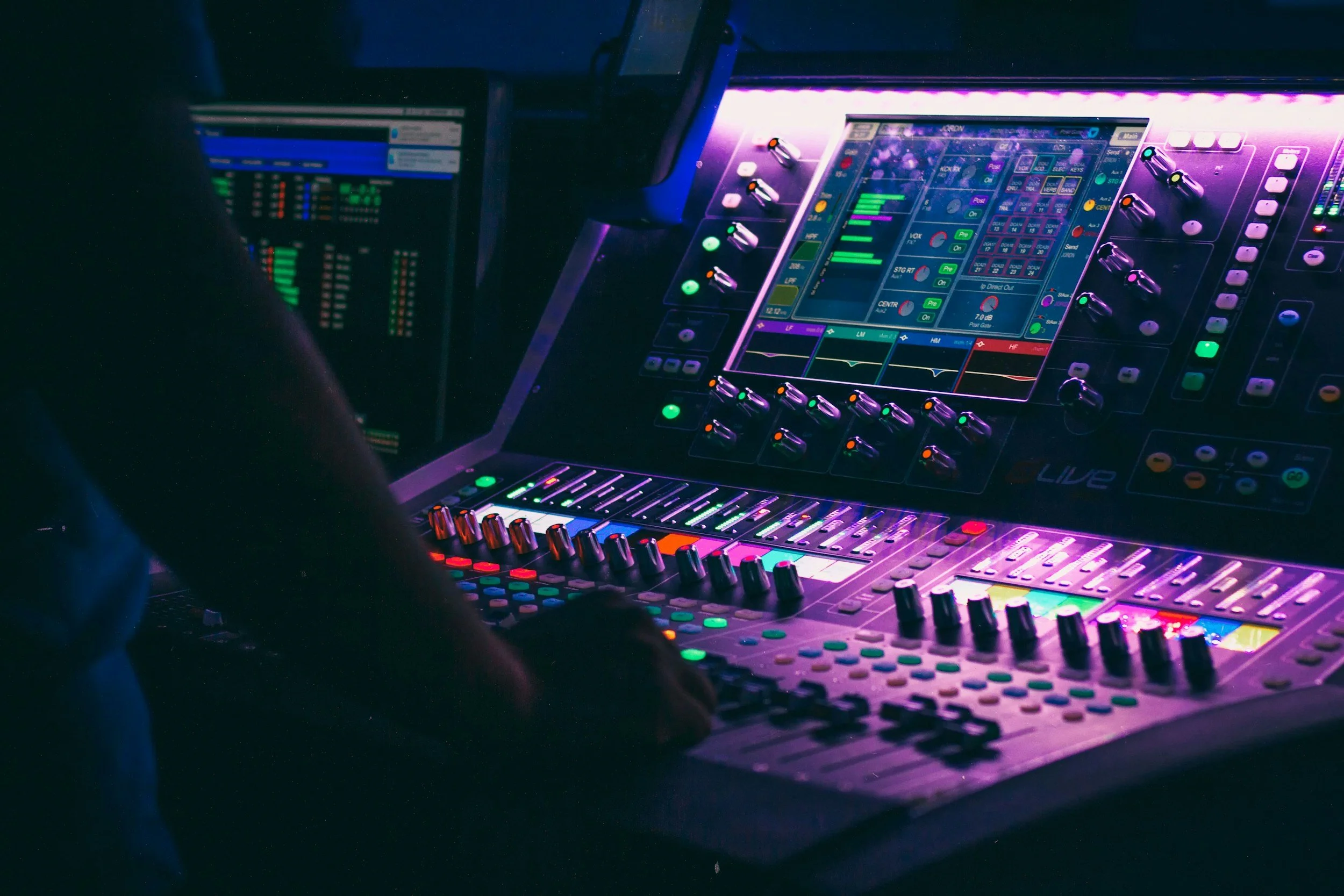
For a while, I was really set on using musical treatment modalities to help patients heal in my future medical practices. I’m a little more lost in terms of what I want to do in medicine now, but to that point I wrote this article about the pros and cons of using electronic music production technology as a way to improve wellness. Enjoy.
Ever since I discovered electronic music production in my junior year of high school, it’s been my main escape from reality, my way of amplifying my feelings for others, and my way to just have fun. I know how powerful it can be in improving wellness, because it has tremendously helped me with mine and has helped me improve the wellness of others around me as well.
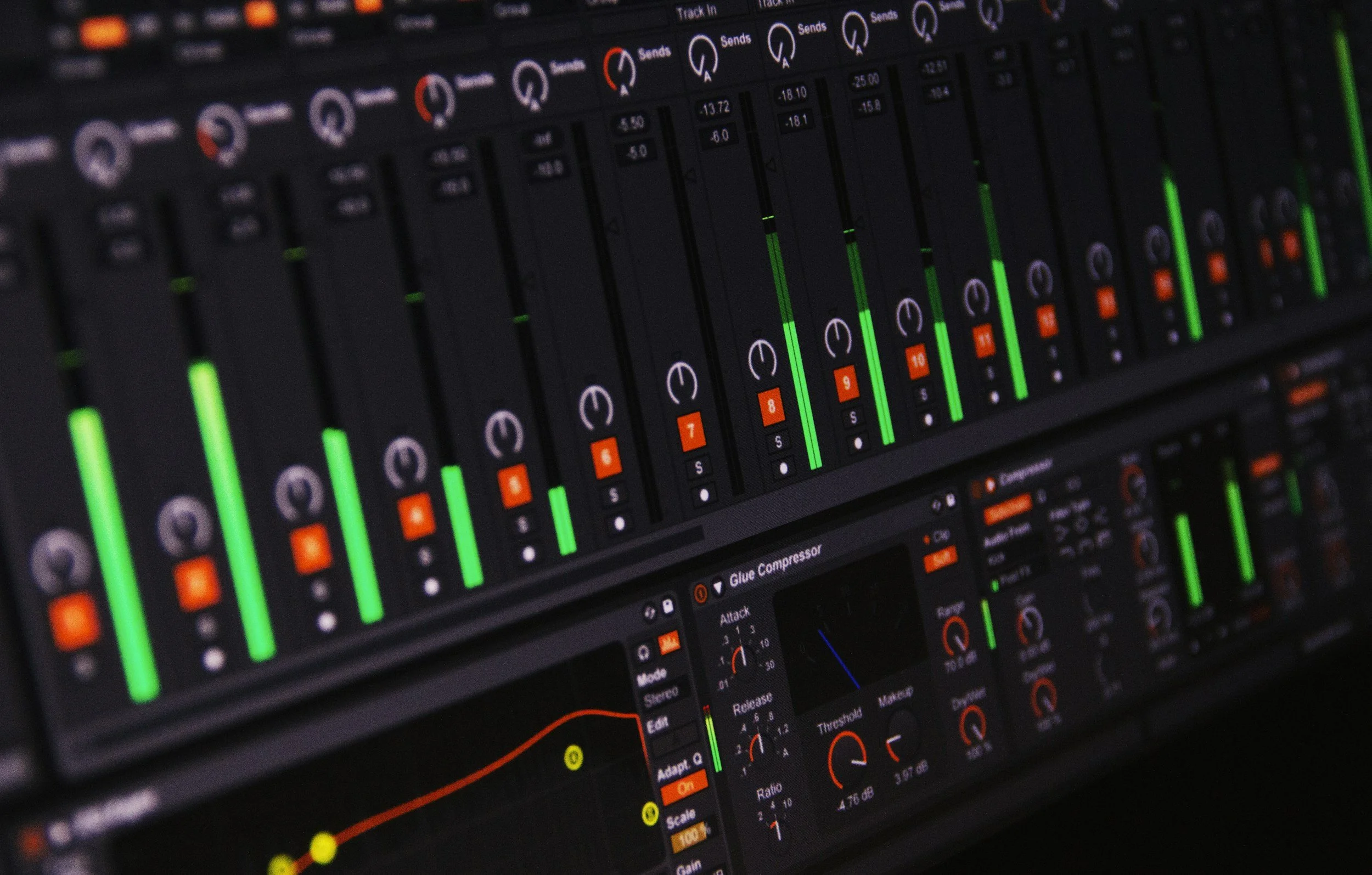
Typically, musical methods to improve health or wellness rely on acoustic instruments, such as a guitar, drum, or voice. However, with the advent of cheap and accessible digital music production technology over the last decade, including MIDI keyboards and intuitive digital audio workspaces (DAW), the floor has been opened to a whole new world of expression which can help all individuals in several ways.
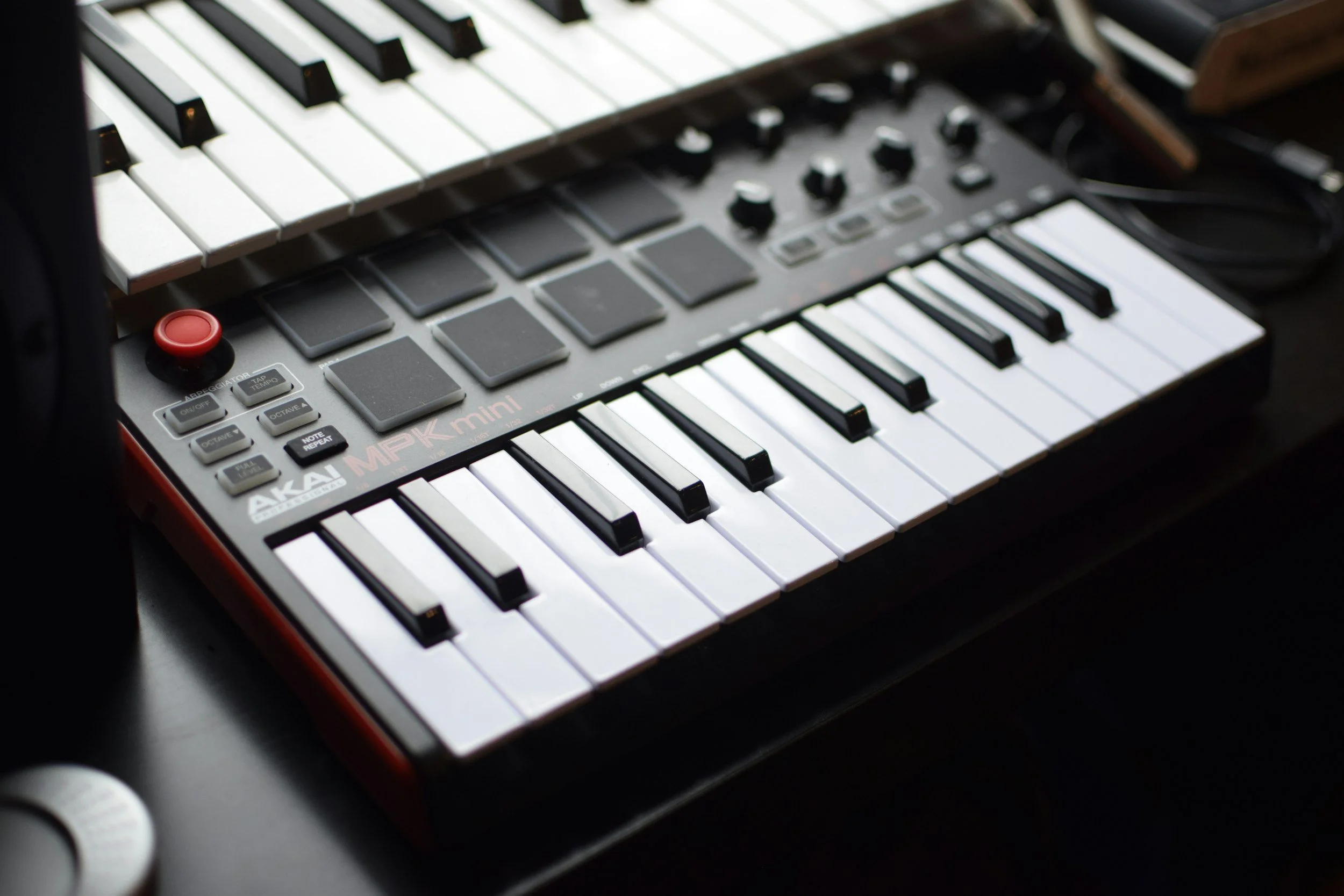
An example of a MIDI keyboard (the one that I use!)
With that said, let’s get into the 5 key ways why electronic music production is such a powerful music tool for wellbeing, and the 3 ways that electronic music production might fall short when compared to traditional acoustic music making.
Electronic music production is incredibly beneficial in 5 key ways:
Endless Possibilities
Autonomy
Low Cost
Portability
Archivability
Pro 1: Endless Possibilities

The possibilities of music making through electronic means are quite literally endless. When producing music electronically, all you need is a computer and a speaker of some kind. Once you have those two basic components, you have the freedom to select whatever sounds best suit your needs and change them whenever you want. Most digital audio workspaces (DAW for short) come with hundreds of preprogrammed sound samples and instrument synthesizers, making it effortless to choose whichever sounds will best suit the need of a given personal or therapeutic intervention. Additionally, it isn’t much more difficult to record your own sounds, or buy “sample packs” online where other musical creators have taken the time to do that for you.
On top of having a library of sounds at your fingertips, any one of these sounds can be edited with effects such as reverb (to provide a more spacious sound), delay (to introduce echoes), or an EQ (to modify the frequency content of sounds). So not only do you practically get to have any instrument you want (and more), but you can modify any sound however you want to fit a specific need.
The benefits of this flexibility don’t end here: electronic music production can include acoustic instruments! All DAWs have solid recording features, which gives you the opportunity to do all kinds of things that previously were not possible. For example, you could loop recorded samples for as long as you want while doing something else, you could edit the instrument’s sound profile to optimize it for your need, or you could save your session for later (more on that in point 5). When I produce music, I often add in violin recordings to enhance my projects, and I’m sure that there would be several music therapy and wellness applications which could benefit from a hybrid approach to music production as well.
Pro 2: Autonomy

Once sounds are selected and edited as appropriate, you can control the advent of these sounds using a MIDI keyboard, a device which uses electronic signals to tell a computer to produce a certain sound. MIDI boards can vary in complexity, but most often they come in the form of a piano keyboard and drum pads, all of which can be programmed to play particular sounds. This provides an incredibly simple way to create music, and gives anyone the autonomy to create music for themselves if they don’t know how to play a more sophisticated analog instrument, or if their health physically prohibits them from playing an acoustic instrument.
This autonomy unlocks an incredible opportunity for people to feel in control of the music they are making: one of the key benefits of MIDI-mediated electronic music is that it makes people feel empowered, independent, and like they have accomplished something (Burland & Magee, 2012). This is especially powerful when someone is dealing with an illness which provides them with limited control of other things in their life. If someone can’t control their eating, can’t control their talking, can’t control their mental anxiousness, or can’t control their pain, providing them with the opportunity to make music by themselves gives them control over something that brings them joy. This is much easier to accomplish with digital music than with acoustic instruments.
Additionally, anyone’s mental health can significantly be improved by having an identity linked to music (Burland & Magee, 2012). For example, if a patient is confined to a hospital bed for a long time or is dealing with a severe illness, it is inevitable that to some degree their identity is reduced to “a patient/person with (insert condition).” Electronic music production can change that: let someone produce music with a MIDI, and they are now a “music producer,” a flashy title that they can proudly associate themselves with.
I’ve experienced this in action, having helped many friends express themselves through my electronic music production. They tell me that they want something to sound a particular way, and I can set up the software such that they can hit a keyboard in the way they envision the music coming out. And while I was the one who helped them integrate the information into a musical format, they are the “music producer” because it was their idea!
Pro 3: Low Cost

Up until pretty recently, the only reliable way to make music electronically was to go into a fancy professional studio which you could only do if you were rich, famous, or knew someone who was one of those two and was kind enough to let you in. The advent of affordable digital music making technology has changed that in every way: nowadays, it has become so easy to make decent sounding music electronically with nothing but a laptop. I owe my ability to learn and use electronic music production to the fact that I was able to get started so easily and without much upfront cost compared to the thousands of dollars it cost to pursue serious violin education.
How expensive is it to get started? If you have a computer already, a few hundred bucks. If you don’t … well that plus the cost of a computer that has decent processing power, which you could definitely find nowadays for under $500. But the beauty is that this aspect could cost you $0 upfront if you already have one to use.
After you have a laptop, all you need is a (DAW), or digital audio workspace. This is the software that lets your program music, and there are a ton of different options. The most popular DAWs for accessible music production are FL Studio (my personal choice), Logic Pro X (only for Macs), and Ableton. While many DAWs have advanced features, you could pretty much get started for $100-200 with any of these choices. Considering that any half decent acoustic instrument costs at least that much or more, this is a steal. While this would get you the bare bones, a MIDI keyboard (~$60-100 on Amazon) and some solid neutral sounding headphones (the Audio Technica ATH-M50X, an industry standard, costs $150) could be added easily for under $250, transforming your setup to set you up for endless music making for easily under $500. This is how I started: all I had was my laptop, a basic version of FL Studio, a small MIDI keyboard, and some Audio Technica headphones. I transformed my wellness and used that to help others with under $500, and you can too.
While you could always buy more gear when your need for them justifies the price (for example, I ended up getting studio monitors after deciding that I wanted to mix music without headphones), the beauty in music making electronically is that you can have a sick setup for under a few hundred dollars. While a few hundred dollars is certainly not objectively cheap, considering the amount you would need to pay for a different way to address health concerns and considering how powerful this setup can be in improving your health and someone else’s, I’d say that it has an incredible bang for buck.
Pro 4: Portability
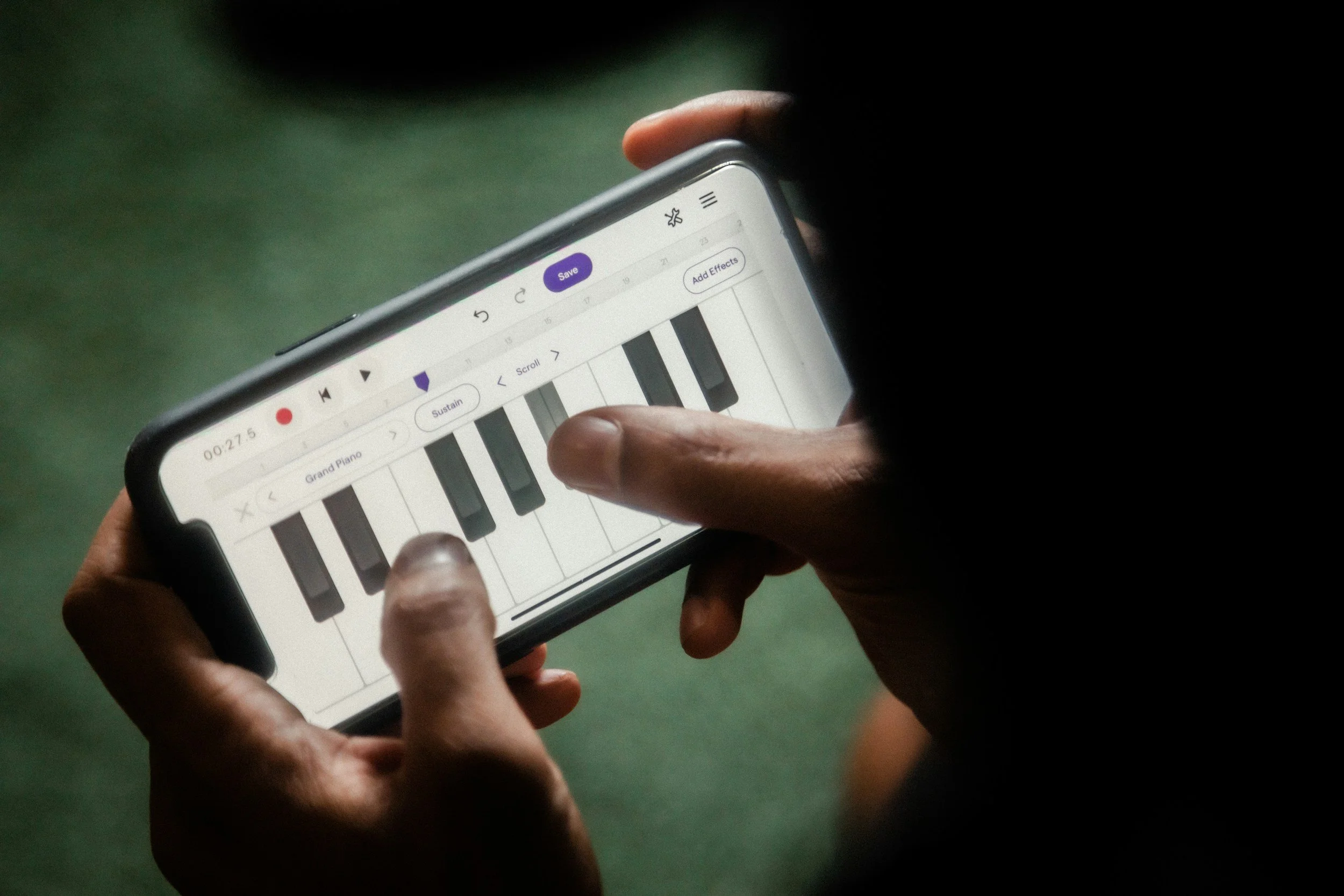
As I said before, all you need to make music is a laptop and some headphones or external monitors. While external monitors can be a little more tricky to move around, I’ve produced music electronically with headphones at the airport, on the plane (although I do not recommend that…it was terrible), in the car, the list goes on. My point: anywhere you can sit (or stand) in peace with a laptop is fair game for using electronic music production to help your mental or physical health. You can pull it out at work after a stressful call, pull it out at a coffee shop, or even in the most confined places in the hospital to help a patient. Unless you want to rock with a harmonica or something (which I think is awesome but not the most versatile), electronic music production provides the best portability you can get with any instrument. Even if you didn’t have headphones, most laptops have built-in speakers (although those aren’t going to be the best for making music) and monitors aren’t always that big. Compare this to having to find a piano or carrying around a guitar, and I’d say electronic music is the best option in terms of portability.
Additionally, the ability for you to choose to use headphones allows you to genuinely make music anywhere, regardless of who is around you. Some other electronic instruments like electric guitars afford you the ability to listen back through headphones (my roommate in college would always practice guitar this way), but if you consider the portability of things as well, electronic music has a HUGE advantage. There is no excuse for not being able to get electronic music to someone who can benefit from it.
Pro 5: Archivability
Electronic music is stored as 1s and 0s and then tells some kind of speaker to perturb the air in the exact same way every single time. This means that music can be saved and reopened at a later time, which is a HUGE benefit.
Let’s talk about the incredible capability of saving music projects first. Just like you save a Word document or Powerpoint, all you need to do to save a music project a quick keyboard shortcut. It’s incredibly simple to save music projects to your computer or hard drive, and this gives it the potential to be worked on for as long as you need.
You might be thinking duh, obviously, but really think about what this means: it gives you the possibility to continue working on a project for as long as you need, and the work you did previously is saved exactly as you thought of it at the moment. This is not possible with acoustic music unless you record it (using some kind of DAW), and even if you memorize created work, your perspective on things may change as you go through life and affect the way you play it in the future.
For example, let’s say that someone is dealing with chronic pain and decides to compose a new section of a song/instrumental every time they go through a new treatment modality as a way to help them cope with it and document it. Being able to save a music project would give this person the ability to continue working on the project, and keep the work that was done completely identical to the way they wrote it at that time.
This leads right into the second aspect of this pro: you can listen to previously created work at any time. The 1s and 0s on your computer’s hard drive aren’t going anywhere (unless you damage the computer…), which means that you can listen to music you made days, weeks, or years ago. This capability is not something to overlook! For the rest of time (hypothetically) anyone could listen to your work, and this retrospective listening ability could actually lift you up by knowing where you used to be. I’ve used this capability several times: whenever I am going through some tough times, I’ll listen to some projects I’ve worked on in the past when something was not going right in my life, and that will give me the confidence I need to keep pushing past it. Again, unless you record an acoustic instrument, this is not possible without some kind of electronic music production.
That wraps up the 5 ways in which electronic music production is beneficial compared to acoustic music production. While these 5 factors are really compelling reasons to utilize electronic music production over acoustic music production, nothing in life is perfect, and that’s why I also can think of 3 main cons when it comes to electronic music production as a modality for wellness.
Acoustic music prodcution has an edge over electronic music production in 3 ways:
The learning curve
Less aesthetic
Not always appropriate
Con 1: The learning curve

Nothing in life comes easy and everything requires at least a bit of work. More specifically, anything that is a medium of expression has a learning curve associated with it. Electronic music production is no different: there’s a learning curve to using DAW software, a learning curve to adding good effects to sounds, a learning curve to mixing, the list goes on. First of all, there are literally a bajillion free tutorials on every aspect of music production on YouTube, and once you learn it, it becomes a habit, and once it becomes a habit, you become one with the computer and anything you want to do becomes a possibility.
The catch is that learning electronic music production requires patience with technology, which is not exactly what most people want to do when they want to make music for themselves or others. For example, practicing a new riff on a guitar is hard, but when you do that at least you are making music and escaping from the computer screen. On the other hand, figuring out how to use DAW software is the LAST thing anyone wants to do when they are trying to improve their wellness. It takes a certain amount of hours to become proficient, and even then there are always tips and tricks to learn: keyboard shortcuts, specific settings, layouts, etc.
BUT…. once you embrace that aspect of music production and get the hang of it, that’s when the magic starts. Once you become one with the computer, the endless possibilities become a reality.
Con 2: Less Aesthetic

While “music producer” is a buzzword nowadays, acoustic instruments like the guitar or violin are seen as more aesthetic than electronic music in the context of healing. From my experiences, making music through electronic means is seen as “cool,” but people give me far more deeper respect when I tell them that I play the violin for others at a high level.
I think one of the major turn-offs with electronic music when seen in the context of wellness is that it by definition has an artificial component to it. Thus, electronic music incorporates technology in an area which most people associate with an escape from scientific fields. Music as a creative art form is supposed to target the “soft" or emotional side of people, so introducing technology into it, especially in the context of health which is already so scientifically driven, is likely viewed by many as tainting the art of music in its healing role. While there is certainly a place for more organic music, I also believe that electronic music can be used to unlock another dimension of music’s role in wellness.
Another reason why electronic music may be less aesthetically pleasing than acoustic instruments is because of the awe that’s inspired by playing an acoustic instrument and the high prestige that comes with playing an instrument well. Playing a classical musical instrument is one of the most prestigious activities one can pursue in society, because it requires a lot of dedication and discipline to learn, and it creates the perception of heightened abilities and moral character. On the other hand, electronic music production is often associated with parties, drugs, and other activities that do not signify moral character to the majority of folks. While this is definitely true to some extent, I believe that this stigma hinders the openness to trying electronic music interventions for wellness, limiting the opportunities for electronic music producers to get out there and help others in the medical setting.
Con 3: Not always appropriate

While I firmly believe that electronic music production has a place in music therapy and overall wellness, there are certainly times when an acoustic source is the way to go. This is primarily the case when a person or music therapist genuinely thinks that an acoustic instrument is better suited for enhancing wellness. I can definitely relate to this: sometimes I don’t want to produce electronic music and instead jam out with the violin to escape from reality. There is something about connecting with an acoustic instrument that does provide certain wellness benefits compared to producing music, and sometimes playing an acoustic instrument is the better option. However, this does not mean that classical or jazz music must be played. In fact, when I pull out my violin, I’ll do some improvisation with house music playing in the background, and I have a blast. Even if classical or jazz music is your jam, that’s totally cool, but I’m saying it is not the only way to connect with acoustic instruments.
On the other hand, electronic music is not appropriate for music therapy when a patient or family is in a very vulnerable place and would benefit from more organic sounds. For example, I heard a music therapist once explain that she helped write a song with a family who was mourning the loss of their child who died from a serious medical condition. In this case, it may not be appropriate to pull out a MIDI keyboard and use electronic instruments.
Overall, while electronic music definitely has a place in wellness, there are certain limitations with it and certain circumstances in which acoustic instruments would indeed work better.
Despite certain reasons why electronic music production may not always be the best solution for enhancing wellness, I believe there is significant untapped potential here for the reasons stated above. The sky's the limit when it comes to using electronic music, and I’m excited to see where music technology can find a place in wellness.
Full disclaimer: I am not a music therapist. These are my opinions based on my experiences.
Citation:
Magee, Wendy & Burland, Karen. (2008). An Exploratory Study of the Use of Electronic Music Technologies in Clinical Music Therapy. Nordic Journal of Music Therapy - NORD J MUSIC THER. 17. 124-141. 10.1080/08098130809478204.